Pit and Fissure Sealants
Description
Pit and fissure sealants are thin, protective coatings applied to the grooves of back teeth to prevent dental caries, especially in children and adolescents.
What they are and why used
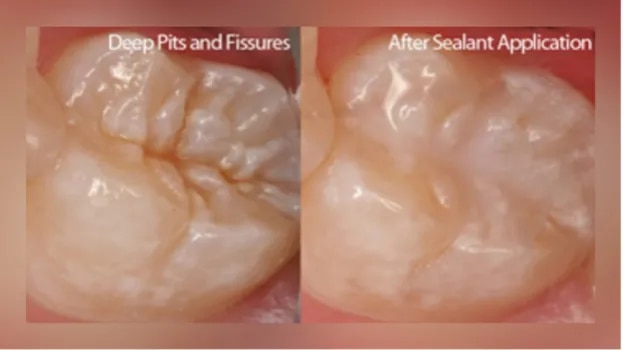
Pit and fissure sealants are flowable materials placed mainly on the occlusal surfaces of premolars and molars to block food and bacteria from collecting in deep pits and grooves. These areas are more prone to decay than smooth surfaces because they are harder to clean and receive less protection from fluoride.
Types of sealant materials
The two main categories are resin‑based sealants and glass ionomer sealants. Resin‑based sealants are usually preferred for their better retention, while glass ionomer sealants are useful when moisture control is difficult and provide fluoride release over time.
Indications and effectiveness
Sealants are recommended for newly erupted permanent molars and premolars with deep or stained fissures, especially in patients at moderate or high caries risk and without obvious cavitated lesions. When properly placed and maintained, sealants significantly reduce occlusal caries, with long‑term studies showing high success rates where retention is maintained.
Basic application steps
Typical clinical steps include cleaning the tooth, isolating it from saliva, etching the enamel (commonly with 37% phosphoric acid), rinsing and drying, applying the sealant to all susceptible pits and fissures, then light‑curing and checking occlusion. Adequate isolation and avoiding salivary contamination are critical because moisture greatly reduces retention of traditional hydrophobic resin sealants.
Newer developments
Newer moisture‑tolerant (hydrophilic) resin sealants have been developed to improve performance when perfect dryness is hard to achieve, such as in erupting molars. These materials aim to combine good retention with easier clinical handling and, in some products, bioactive or fluoride‑releasing properties.