Crown and Bridge
What Are Crowns and Bridges?
Dental Crown
A crown (also called a “cap”) is a custom-made covering that fits over a damaged or weakened tooth.
Purpose: strengthen a tooth, restore its shape/size, protect it after procedures (like root canal), or improve appearance.
Materials: can be made from different materials — porcelain, ceramic, metal alloys (like gold), and combinations (e.g., porcelain-fused-to-metal).
Procedure: Tooth is prepared (reshaped), an impression is taken, a temporary crown is placed, and then the permanent crown is cemented.
Dental Bridge
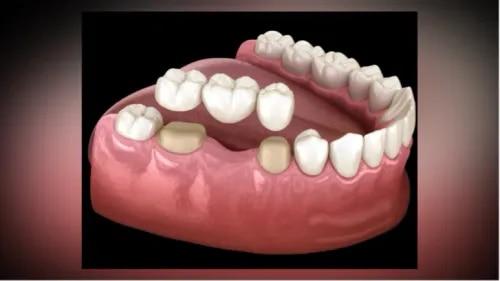
A bridge is used to replace one or more missing teeth.
Structure: It typically has abutment teeth (natural teeth on either side of the gap) that are capped with crowns, and a pontic (the false tooth) in between.
Types:
There are different kinds of bridges:
Traditional bridges (crowns on both sides)
Cantilever bridges (supported only from one side)
Maryland (resin-bonded) bridges (winged design, less invasive)
Implant-supported bridges (anchored on dental implants)
Materials: Similar to crowns — porcelain, porcelain-fused-to-metal, or metal.
Procedure: Teeth adjacent to the gap are prepared, impressions are taken, a temporary bridge may be placed, and later the final bridge is cemented.
Why Use Crowns and Bridges?
Restoration: To restore broken, cracked, or decayed teeth that can’t be fixed by regular fillings.
Missing Teeth: Bridges fill in the gaps where teeth are missing, preventing neighbouring teeth from shifting.
After Root Canal: Crowns protect teeth that have had root canal treatment.
Aesthetics: Improve appearance — shape, color, alignment of teeth.
Function: Restore chewing ability, maintain bite, and prevent problems like misalignment.
Advantages & Limitations
Advantages:
Permanent (they are cemented, not removable by you).
Can look very natural (especially porcelain/ceramic types).
Restore strength and function to damaged or missing teeth.
Limitations / Risks:
Adjacent teeth (for bridges) need to be prepared (i.e. shaved) to hold the crowns.
There’s a risk of decay or periodontal disease if hygiene is poor.
Cost: Can be expensive depending on material and complexity.
Lifespan: Crowns/bridges don’t last forever — may need replacement over time.
Types of Crown Materials
All-ceramic / Porcelain: Good aesthetics, natural-looking.
Porcelain-fused-to-metal (PFM):
Stronger, good for back teeth.
Metal (Gold or Alloys):
Very strong, but less aesthetic.
Zirconia:
Very strong and increasingly popular.
How Long Do They Last?
Their longevity depends a lot on how well you care for them: brushing, flossing, and regular dental check-ups matter.
On average, many crowns/bridges last 5–15 years, but with good care, they can last longer.