Delhi
08048034081
+919818331692

general dentistry

Cast Partial Dentures (RPD)

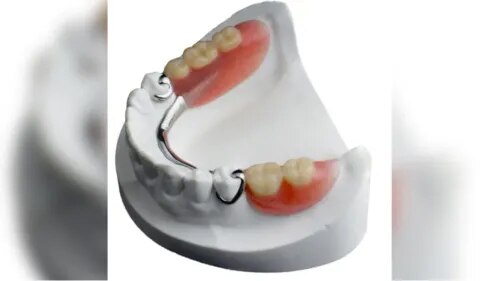
A cast partial denture is a removable plate or frame that supports one or more artificial teeth and is used to fill in the gaps left by missing teeth in the mouth. It is made of a cast metal framework with artificial teeth made of acrylic resin attached to it. These dentures are mainly used when the remaining teeth are intact. They provide benefits for performance, appearance, and oral health. Cast partial dentures restore correct chewing and speaking while preventing neighbouring teeth from slipping by supporting and stabilizing remaining teeth. They provide a stable and pleasant fit customized to each patient's oral structure and serve as an alternative for fixed bridges or dental implants. Patients with partial tooth loss can improve their general dental health and self-confidence with cast partial dentures, which are affordable and dependable. Why are Cast Partial Dentures recommended? Cast Partial Dentures are recommended when the patient has lost some natural teeth while the remaining teeth are healthy and in good condition. They are suitable for cases when one or more adjacent teeth are missing due to decay, trauma etc. They can fill in the spaces and restore normal occlusion by spreading across the areas that are missing teeth. These dentures are good at uniformly dispersing the biting force across the remaining teeth; hence they are used for posterior regions. It prevents excessive pressure on individual teeth. Patients with health issues, dental conditions or insufficient bone support who are not suitable candidates for implants or fixed dentures can go for cast partial dentures. These dentures are viable for patients with financial constraints as cast partial dentures provide good functionality and aesthetics. Patients' dental health, aesthetic concerns, financial situation, and desired treatment objectives are some of the important factors in determining whether cast partial denture is the best option. A thorough and proper examination by a dentist is mandatory before opting for any dental treatment. Reasons for recommending Cast Partial Dentures: 1. Partial tooth loss in patients Spaces or gaps between teeth due to tooth loss Multiple adjacent missing teeth Posterior region tooth loss 2. Natural teeth are present in healthy condition. Healthy teeth present to support the partial denture framework Remaining teeth able to provide support and stability to the denture 3. Alternative treatment solution Candidates not suitable for dental implants or fixed bridges Financial constraints, medical conditions, inadequate bone support 4. Need to restore function and esthetics Restores chewing and speaking abilities Improves occlusion and bite alignment 5. Stability and support requirements Even distribution of bite forces without pressure on one tooth. Can anchor on remaining teeth for the partial denture. ✨ Advantages Very strong and durable compared to acrylic partial dentures Thin and comfortable due to metal framework Precise fit ensures better retention and stability Less coverage of soft tissues → better oral hygiene Forces are shared with teeth through rests → physiologically acceptable

Root canal treatments (RCT)

Root canal treatments (RCT) We are the best dental clinic in Lajpat Nagar and South Delhi, We use a painless injection technique with our latest technology to make the entire dental experience absolutely pain-free and stress-free. We have a special package for the Inbound clients / patients. Root Canal Treatment (RCT) also is known as Endodontic Treatment is a procedure done when the tooth decay reaches the pulp (innermost layer of the tooth) causing inflammation. Earlier any significantly infacted or damaged tooth was just extracted. Today due to this root canal treatment most of the damaged or impacted teeth can be saved thus avoiding their extraction. An extraction is truly the last resort Indications for the Root Canal Treatment:- • Severe decay or injury involving the nerve of tooth. • Severe sensitivity to hot and cold foods. • Spontaneous pain or throbbing while biting. • An abscess (Infection or Pus) in the bone. Root Canal treatment consists of:- Removal of the infected nerve tissue that lies within the root of every tooth. This nerve tissue once infected by decay or injury to the tooth causes pain, or severe sensitivity to hot and cold foods. This infected nerves tissue eventually forms as abscess. • The first step in RCT is to obtain access to the nerve tissue which is accomplished by establishing a small access opening on the top of the teeth. All this is done under local anesthesia. • All this infected nerve tissue is removed right up to the entire length of the root after determining the root length. Then the entire root canal is reshaped so as to remove the infected material and accept the special root canal filling material. • The number of sittings for a root canal treatment depend upon the severity of infection and complicity of the procedure. • The final step would be to seal the root canal with a sterile, plastic material called gutta percha. This would prevent possible future infection. • Due to the use of local anesthesia the entire procedure becomes painless. • In order to restore the normal form and function of the tooth and also to prolong its life a crown is recommended to be placed on the root canal treated teeth.

Cleaning and polishing of teeth

Cleaning and polishing of teeth We are the best dental clinic in Lajpat Nagar and South Delhi, We use a painless injection technique with our latest technology to make the entire dental experience absolutely pain-free and stress-free. We have a special package for the Inbound clients / patients. Tooth polishing is a simple procedure that dentists pair with tooth scaling during your biannual cleaning and exam. Most of the people visiting the dentist have a lot of anticipation regarding the cleaning procedure. They apprehend it to be a painful and uncomfortable process. However, one should know about the entire process before having any such fears. In short, dental cleaning consists of steps to clean around the gum line and remove all the tartar and plaque. Below is the process in detail: Examining the mouth physically: First of all, the dental hygienist checks the mouth with a small mirror. It is to make sure that there are no major dental issues. If some symptom prevails, the hygienist calls the dentist to make them fine to proceed. Remove plaque and tartar: The hygienist now uses a scalar to remove the tartar and plaque around the gum line and in between the teeth. Cleaning with toothpaste: After all the tartar is wiped out, the hygienist will clean the teeth with an electric toothbrush. It is for the deep cleaning of teeth. Flossing and rinsing: To remove the leftover food and debris, you will be given an expert flossing session followed by the liquid Fluoride rinse. Fluoride treatment: The final step of the session is Fluoride treatment. The procedure is provided to maintain dental hygiene for at least 2-3 months

Wisdom tooth removal

Wisdom tooth removal We are the best dental clinic in Lajpat Nagar and South Delhi, We use a painless injection technique with our latest technology to make the entire dental experience absolutely pain-free and stress-free. We have a special package for the Inbound clients / patients. Wisdom teeth removal surgery is an outpatient procedure that is typically performed by a dentist or oral surgeon. “Wisdom teeth” are a type of molar. Molars are the chewing teeth found furthest in the back of the mouth. Most humans have first, second, and third molars. A person's third molars are their wisdom teeth. These teeth come in behind the 2nd molars (if there is room for them and they are aligned properly), usually during a person's late teens or early twenties. Typically a person will have four wisdom teeth: upper left, upper right, lower left, and lower right. What are “impacted wisdom teeth?” In dental terminology an “impacted” tooth refers to a tooth that has failed to emerge fully into its expected position. This failure to erupt properly might occur because there is not enough room in the person's jaw to accommodate the tooth, or because the angulation of the tooth is improper. Classifications of impacted wisdom teeth. Dentists use specific terms to describe the positioning of impacted wisdom teeth. The most common type of impacted wisdom tooth is one that is impacted mesially. The term “mesial” simply means that the wisdom tooth is angled forward, toward the front of the mouth. The other types of impactions, in order of frequency of occurrence, are the vertical, horizontal, and distal types. In addition to mesially, vertically, horizontally, and distally impacted, wisdom teeth can also be classified as soft tissue or bony impactions. The term “bony” impaction indicates that the wisdom tooth is still fully encased in the jaw's bone. A “soft tissue” impaction is one where the upper portion of a wisdom tooth (the tooth's crown) has penetrated through the bone, but has not yet erupted fully through the gums. Why might a wisdom tooth be impacted? The reason why some wisdom teeth are impacted is not an easy question to answer. A primary cause of wisdom tooth impaction is simply that there is inadequate jawbone space behind the person's second molar. Why this lack of space exists is not fully understood, however there does seem to be a correlation between large tooth size, tooth crowding, and the presence of impacted wisdom teeth. It has been theorized that the coarse nature of stone age man's diet had the effect of producing extensive tooth wear, not only on the chewing surface of the teeth but also on the sides of the teeth where neighboring teeth rest against each other. The net effect of this wear would be a reduction in the collective “length” of the teeth as a set, thus creating enough jawbone space to accommodate the wisdom teeth by the time they erupted. In comparison the diet of modern man does not usually cause a significant amount of this type of tooth wear. It has also been argued that the coarse nature of stone age man's diet, as compared to modern man's relatively soft diet, probably required more activity of the “chewing” muscles. This activity could have stimulated greater jawbone growth, thus providing more space for wisdom teeth. The harsh and threatening world of the caveman no doubt often lead to the occurrence of broken teeth and even tooth loss. Once a tooth (or a portion of it) is missing the teeth behind it have a tendency to move forward. This shifting would make more jawbone space available for the wisdom teeth. In comparison, with the advent of modern dentistry there are relatively few reasons why a tooth should be lost or remain in a state of disrepair. Why do impacted wisdom teeth need to be extracted? The precise reasons why an individual's wisdom teeth might need to be extracted should be explained to them by their dentist, after an examination which almost certainly will need to include dental x-rays. While each person's situation will be unique, some of the more common topics dentists discuss when they describe to a person why their wisdom teeth should be removed are listed below. The rationale associated with the first group of reasons given here is based on the fact that wisdom teeth, either partially or fully erupted, are often very difficult to clean. (The term “erupted” used here means that the wisdom tooth has, at least to some degree, penetrated through the gums.) Any location in the mouth where plaque is allowed to accumulate and persist, such as around a partially erupted wisdom tooth, a person will run the risk of developing dental problems such as tooth decay (“cavities”), periodontal disease (“gum disease”), or recurring infections. Typically it is the partially erupted impacted wisdom tooth that is more unpredictable or troublesome for a person than an impacted wisdom tooth that has never penetrated through the gum tissue.

Restorative fillings

Restorative fillings We are the best dental clinic in Lajpat Nagar and South Delhi, We use a painless injection technique with our latest technology to make the entire dental experience absolutely pain-free and stress-free. We have a special package for the Inbound clients / patients. Restorations are the various ways your dentist can replace or restore your missing teeth or missing parts of your tooth structure, or structures. “Restorative dentistry” is the term dental professionals use to explain how they replace missing or damaged teeth. Fillings, crowns (“caps”), bridges and implants are common restorative options. The goal is to bring back your natural smile and prevent future oral health issues. Why restorative dentistry procedures are important Filling empty spaces in the mouth helps keep teeth properly aligned Replacing teeth makes it easier to maintain good oral care habits to help prevent plaque build-up and the problems plaque can lead to Missing teeth can affect your health, appearance and self-esteem Restorative Dentistry Treatment Options Fillings The most common way to treat a cavity is for your dentist to remove the decay and fill the tooth with one of several different materials. These filling materials include gold, porcelain, silver amalgam (which consists of mercury mixed with silver, tin, zinc and copper), tooth-colored plastic or composite resin.

Bone Grafting

Bone Grafting We are the best dental clinic in Lajpat Nagar and South Delhi, We use a painless injection technique with our latest technology to make the entire dental experience absolutely pain-free and stress-free. We have a special package for the Inbound clients / patients. In the past, the treatment of periodontal (gum) disease was considered to be painful and disfiguring. For many years, the best way to achieve the ultimate goal of therapy (shallow, maintainable pockets) was to do resective surgical procedures that often resulted in the exposure of sensitive root surfaces and the appearance of “long” teeth. Today, our Periodontist, are often able to restore or regenerate missing bone and attachment around teeth subjected to long-standing periodontal disease. In addition, if you have lost a tooth due to trauma or disease, we can restore or regenerate bone prior to the placement of bridges or implants. Guided Tissue Regeneration (GTR) refers to procedures that attempt to regenerate lost periodontal structures (bone, periodontal ligament, and connective tissue attachment) that support our teeth. This is accomplished using biocompatible membranes, often in combination with bone grafts and/or tissue stimulating proteins. Guided Bone Regeneration (GBR) refers to procedures that attempt to regenerate bone prior to the placement of bridges or, more commonly, implants. This is accomplished using bone grafts and biocompatible membranes that keep out tissue and allow the bone to grow. We have great techniques available to us to replace missing bone. We can increase the height of bone and the width of bone. We can fill in anatomical voids in bone thereby creating new bone and we can fill in all sorts of defects that develop when teeth are lost. We can even use grafting techniques to prevent the loss of bone in circumstances where bone would normally be lost like the extraction of a tooth.

Subcategory Tags

Phone Number

Email Address dramitgup1974@gmail.com

Mon-Thu: 10 AM - 2 PM • Fri: 3 PM - 7AM

Address

K, Firoz Ghandi Marg, Block K, Lajpat Nagar II, Lajpat Nagar, New Delhi, Delhi 110024, Delhi