
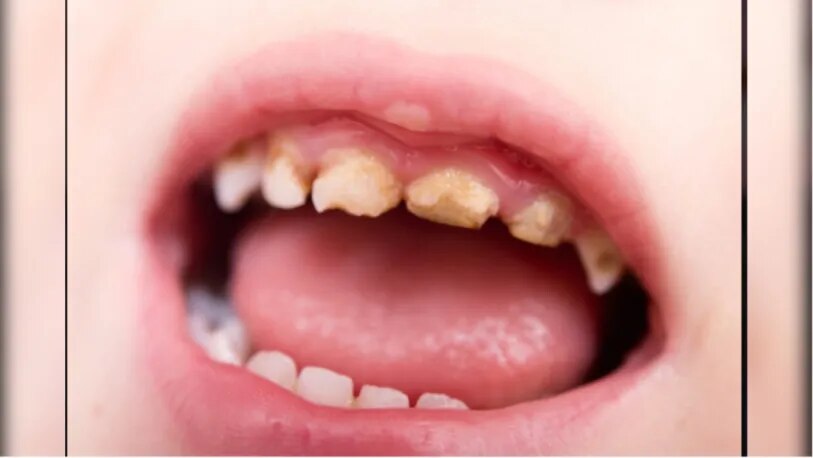
Caries in milk teeth
Description
Caries, or tooth decay, in milk teeth (primary teeth) occurs when bacteria in a child's mouth feed on sugars from milk, juice, or foods, producing acids that erode enamel and form cavities, often starting as white chalky lines near the gums.
Causes
Sugary liquids like milk left in the mouth, especially during prolonged bottle-feeding or bedtime feeds, combine with bacteria to create acid that weakens teeth. Poor oral hygiene, frequent sugary snacks, and low saliva flow during sleep accelerate plaque buildup and decay.
Symptoms and Risks
Early signs include opaque white spots on upper front teeth, progressing to pain, sensitivity, swelling, and abscesses if untreated. Untreated caries can infect gums, damage developing permanent teeth, cause misalignment, and lead to early tooth loss or nutritional issues.
Prevention
Brush twice daily with fluoride toothpaste, limit sugary foods/drinks, avoid bedtime bottles, and schedule dental check-ups from the first tooth. Wipe gums after feeds and transition to cups by age one to reduce milk pooling.
Treatment
Early-stage decay
Fluoride varnish: Applied by a dental professional to strengthen enamel and reverse early decay.
Silver Diamine Fluoride (SDF): A liquid applied to stop decay from progressing, though it can turn the affected area black.
Preventative measures: A dentist may recommend dietary changes and improved oral hygiene practices in addition to other treatments.
Advanced decay
Fillings: For early cavities, the dentist removes the decay and fills the tooth with a restorative material to protect it.
Crowns: Used for larger cavities that have damaged the tooth significantly. A stainless steel crown is often used for baby teeth to provide a durable, long-lasting restoration.
Pulp treatment: This may be necessary if the decay has reached the tooth's pulp.
Extraction: In severe cases of infection or extensive decay, the tooth may need to be removed.
Important considerations
See a dentist early: It's recommended to take your child to the dentist by their first birthday or after their first tooth erupts for regular checkups.
Consult a professional: Avoid trying home remedies for decay, as they can be harmful.
Sedation: For some children, sedation may be necessary for invasive treatments due to their age.