Oral cancer can affect the lips, tongue, cheeks, floor of the mouth, and throat. Early detection dramatically improves treatment success, yet many people delay seeing a dentist because they mistake symptoms for minor problems. If you live near Lajpat Nagar, Delhi, and are aged 38–65, knowing the warning signs and getting regular screenings at a dental clinic can make a life-saving difference.
Common warning signs to watch for
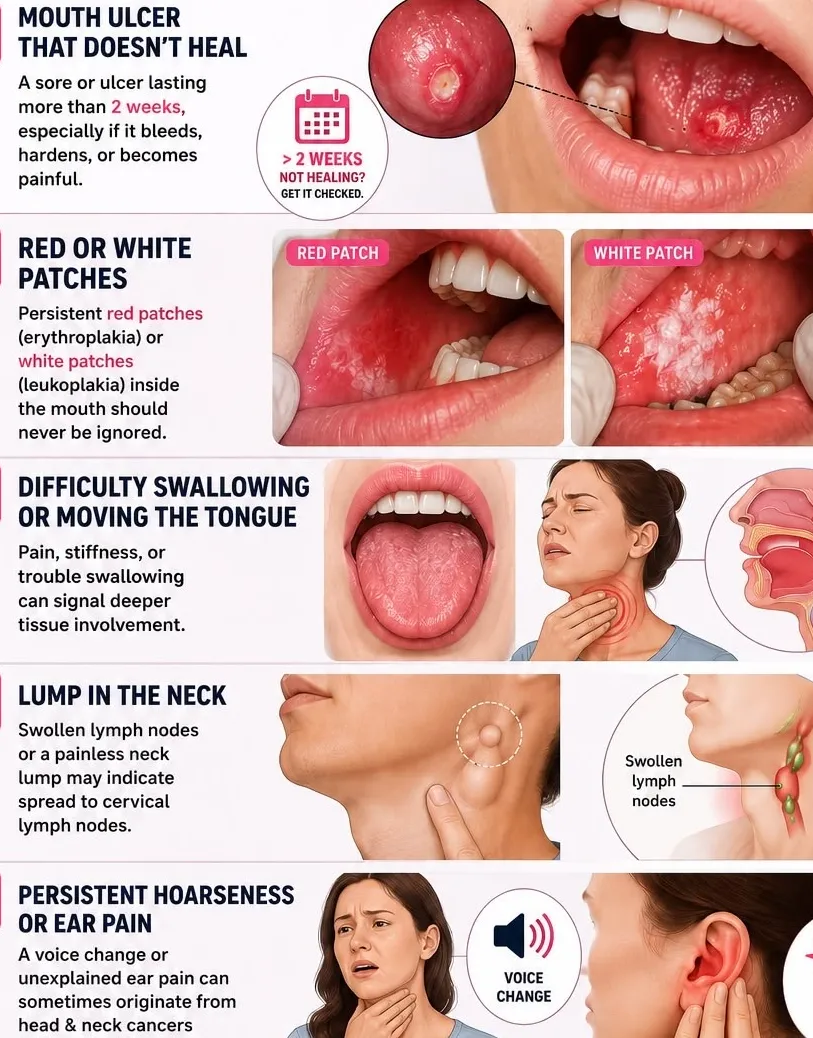
• Persistent mouth sores that do not heal within two weeks.
• Red or white patches (erythroplakia or leukoplakia) on the tongue, gums, or inner cheek.
• Unexplained lumps or thickening in the mouth or neck.
• Pain, numbness, or loss of feeling in any area of the mouth.
• Difficulty chewing, swallowing, or moving the jaw or tongue.
• Changes in voice or a persistent sore throat.
• Loose teeth or ill-fitting dentures without obvious cause.
• Unusual bleeding from the mouth.
Who is at higher risk?
• Tobacco users (smoking or chewing) and heavy alcohol consumers.
• People with prolonged sun exposure to the lips.
• Individuals with human papillomavirus (HPV) infection.
• Those with a history of prior oral cancers.
• People over 40—risk increases with age.
Why early detection matters
Early-stage oral cancers are smaller and less likely to have spread, which usually means simpler treatment, fewer side effects, and better survival rates. A dental exam that includes an oral cancer screening is quick, painless, and can be done during your routine checkup. Detecting pre-cancerous changes also allows for early intervention to prevent progression.
What to expect during an oral cancer screening
• Visual examination of the lips, tongue, gums, and throat.
• Feeling for lumps or irregular tissue in the mouth and neck.
• Use of special lights or dyes in some clinics to reveal abnormal tissue.
• If needed, a biopsy or referral to a specialist for further testing.
Simple steps you can take today
• Book a screening at a local dental clinic if you notice any warning signs.
• Quit tobacco and limit alcohol—both are major risk factors.
• Maintain good oral hygiene and visit your dentist every 6–12 months.
• Protect your lips from sun exposure with lip balm containing SPF.
• Get vaccinated against HPV if appropriate and discuss with your physician.
If you notice any persistent mouth changes, call us today to schedule an oral cancer screening. Early detection saves lives.
Common warning signs to watch for
• Persistent mouth sores that do not heal within two weeks.
• Red or white patches (erythroplakia or leukoplakia) on the tongue, gums, or inner cheek.
• Unexplained lumps or thickening in the mouth or neck.
• Pain, numbness, or loss of feeling in any area of the mouth.
• Difficulty chewing, swallowing, or moving the jaw or tongue.
• Changes in voice or a persistent sore throat.
• Loose teeth or ill-fitting dentures without obvious cause.
• Unusual bleeding from the mouth.
Who is at higher risk?
• Tobacco users (smoking or chewing) and heavy alcohol consumers.
• People with prolonged sun exposure to the lips.
• Individuals with human papillomavirus (HPV) infection.
• Those with a history of prior oral cancers.
• People over 40—risk increases with age.
Why early detection matters
Early-stage oral cancers are smaller and less likely to have spread, which usually means simpler treatment, fewer side effects, and better survival rates. A dental exam that includes an oral cancer screening is quick, painless, and can be done during your routine checkup. Detecting pre-cancerous changes also allows for early intervention to prevent progression.
What to expect during an oral cancer screening
• Visual examination of the lips, tongue, gums, and throat.
• Feeling for lumps or irregular tissue in the mouth and neck.
• Use of special lights or dyes in some clinics to reveal abnormal tissue.
• If needed, a biopsy or referral to a specialist for further testing.
Simple steps you can take today
• Book a screening at a local dental clinic if you notice any warning signs.
• Quit tobacco and limit alcohol—both are major risk factors.
• Maintain good oral hygiene and visit your dentist every 6–12 months.
• Protect your lips from sun exposure with lip balm containing SPF.
• Get vaccinated against HPV if appropriate and discuss with your physician.
If you notice any persistent mouth changes, call us today to schedule an oral cancer screening. Early detection saves lives.
Keywords