Tooth decay (dental caries) is one of the most common dental problems adults face.
Understanding the stages of tooth decay helps you spot symptoms early and get the right treatment before a small cavity becomes a bigger, more expensive problem.
If you live near Lajpat Nagar, Delhi, and are aged 38–65, this guide explains what to watch for and when to visit your dentist.
- What causes tooth decay?
Tooth decay happens when bacteria in plaque feed on sugars and produce acids that dissolve tooth enamel. Poor oral hygiene, frequent snacking, dry mouth, smoking, and existing fillings or gum recession increase the risk, factors commonly seen in middle-aged adults.
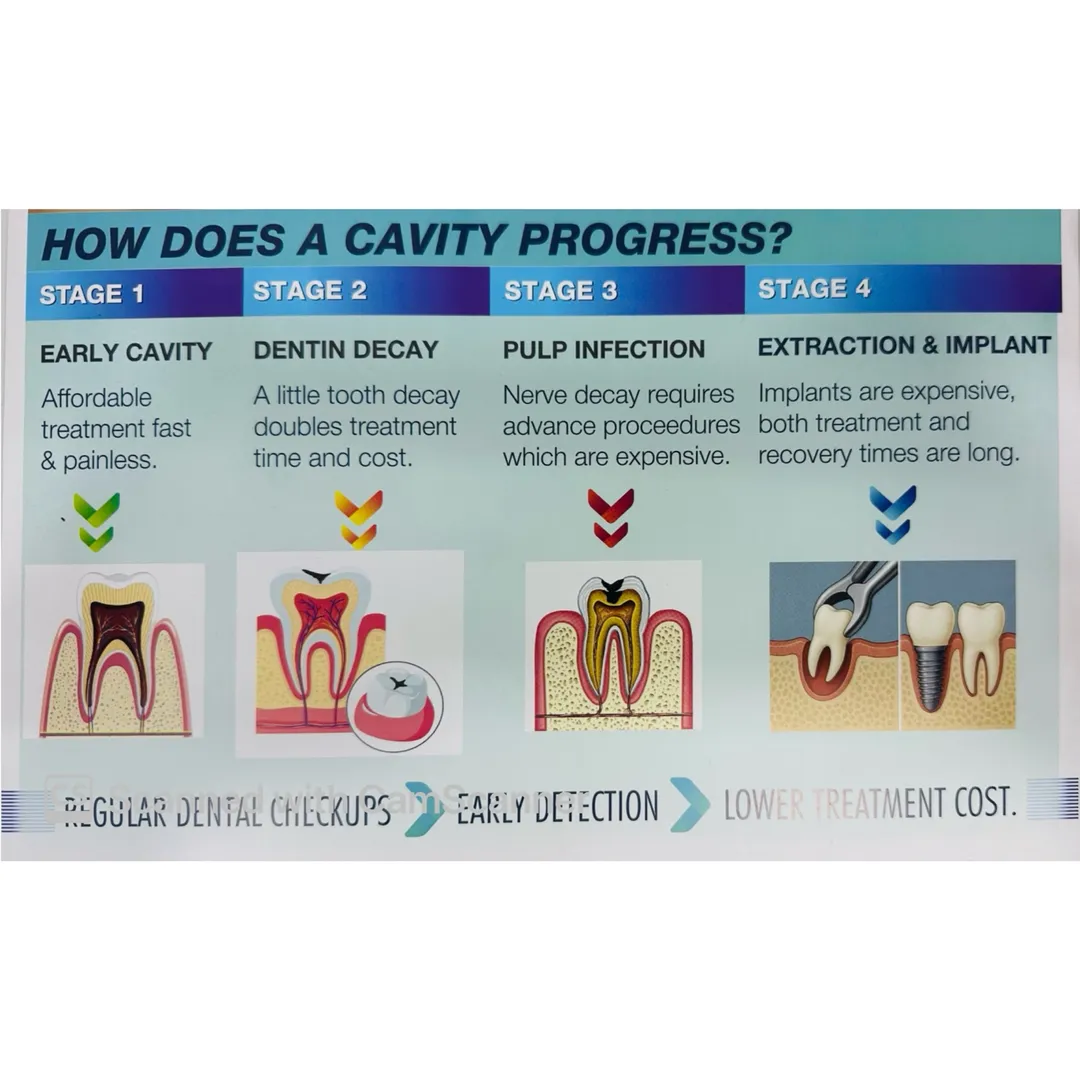
Stage 1 — White Spot (Demineralization)
• What happens: Acid starts to remove minerals from the enamel, creating chalky white spots.
• Symptoms: Often no pain; you might notice a rough or discolored spot on the tooth.
• What to do: Remineralization with fluoride toothpaste, improved brushing and flossing, reduce sugary drinks, and a dental check-up. Early treatment can reverse the damage.
Stage 2 — Enamel Decay
• What happens: The enamel breaks down further and a cavity (hole) forms.
• Symptoms: Sensitivity to cold, sweets, or pressure; visible dark spot or pit on the tooth.
• What to do: A dentist will usually remove decay and place a filling. Don’t delay—smaller fillings are more conservative and last longer.
Stage 3 — Dentin Decay
• What happens: Decay reaches the dentin (the softer layer beneath enamel) and spreads faster.
• Symptoms: Increased sensitivity and intermittent toothache; possible visible discoloration.
• What to do: Restorations may be larger; your dentist might recommend an onlay, crown, or deeper filling.
Stage 4 — Pulpitis (Infection of the Nerve)
• What happens: Bacteria reach the dental pulp (nerve and blood supply), causing inflammation or infection.
• Symptoms: Severe, persistent toothache, throbbing pain, pain worsening at night or when lying down, swelling, and sensitivity to hot and cold.
• What to do: Root canal treatment or extraction is often required. Early intervention can save the tooth.
Stage 5 — Abscess and Spread of Infection
• What happens: The infection forms a pus-filled abscess and may spread to surrounding bone and tissues.
• Symptoms: Severe pain, facial swelling, fever, bad taste, difficulty chewing, and swollen lymph nodes.
• What to do: Immediate dental or medical attention is needed. Treatment includes drainage, antibiotics, and definitive dental care (root canal or extraction).
- Common symptoms patients in Lajpat Nagar report
• Gradual or sudden tooth sensitivity
• Pain while chewing or biting
• Visible pits, dark spots, or crumbling tooth edges
• Bad breath or unpleasant taste
• Swelling or tenderness in gums near the affected tooth
- Prevention tips that work for busy adults
• Brush twice daily with fluoride toothpaste and floss daily.
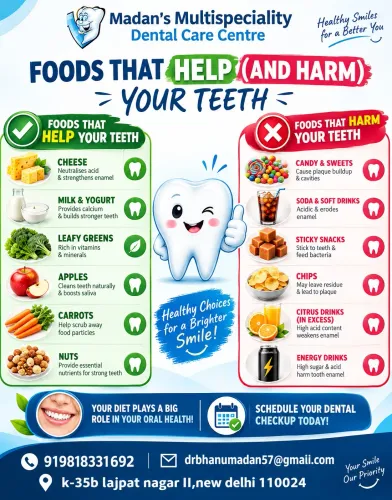
• Limit sugary snacks and acidic drinks; chew sugar-free gum after meals.
• Stay hydrated to avoid dry mouth; discuss medications that cause dry mouth with your doctor.
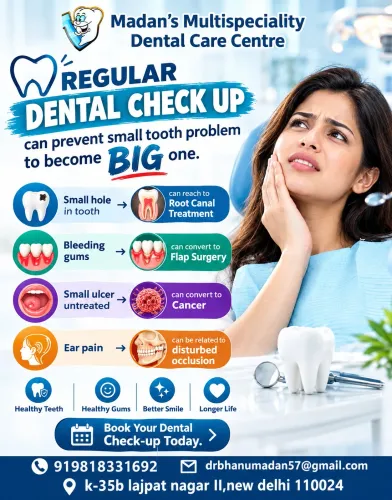
• Visit your dentist every 6–12 months for check-ups and professional cleaning.
• Use fluoride treatments or dental sealants if recommended.
- When to see a dentist in Lajpat Nagar
If you notice sensitivity that won’t go away, visible spots or holes, persistent pain, or swelling, book an appointment promptly. Early treatment is less invasive and more affordable.
If you live near Lajpat Nagar and need an exam or advice on preventing tooth decay, book a consultation at Madan’s Multispeciality Dental Care Centre. Our team specializes in conservative, evidence-based care to protect your natural teeth and keep you comfortable.
Call 9818224469 today!
Understanding the stages of tooth decay helps you spot symptoms early and get the right treatment before a small cavity becomes a bigger, more expensive problem.
If you live near Lajpat Nagar, Delhi, and are aged 38–65, this guide explains what to watch for and when to visit your dentist.
- What causes tooth decay?
Tooth decay happens when bacteria in plaque feed on sugars and produce acids that dissolve tooth enamel. Poor oral hygiene, frequent snacking, dry mouth, smoking, and existing fillings or gum recession increase the risk, factors commonly seen in middle-aged adults.
Stage 1 — White Spot (Demineralization)
• What happens: Acid starts to remove minerals from the enamel, creating chalky white spots.
• Symptoms: Often no pain; you might notice a rough or discolored spot on the tooth.
• What to do: Remineralization with fluoride toothpaste, improved brushing and flossing, reduce sugary drinks, and a dental check-up. Early treatment can reverse the damage.
Stage 2 — Enamel Decay
• What happens: The enamel breaks down further and a cavity (hole) forms.
• Symptoms: Sensitivity to cold, sweets, or pressure; visible dark spot or pit on the tooth.
• What to do: A dentist will usually remove decay and place a filling. Don’t delay—smaller fillings are more conservative and last longer.
Stage 3 — Dentin Decay
• What happens: Decay reaches the dentin (the softer layer beneath enamel) and spreads faster.
• Symptoms: Increased sensitivity and intermittent toothache; possible visible discoloration.
• What to do: Restorations may be larger; your dentist might recommend an onlay, crown, or deeper filling.
Stage 4 — Pulpitis (Infection of the Nerve)
• What happens: Bacteria reach the dental pulp (nerve and blood supply), causing inflammation or infection.
• Symptoms: Severe, persistent toothache, throbbing pain, pain worsening at night or when lying down, swelling, and sensitivity to hot and cold.
• What to do: Root canal treatment or extraction is often required. Early intervention can save the tooth.
Stage 5 — Abscess and Spread of Infection
• What happens: The infection forms a pus-filled abscess and may spread to surrounding bone and tissues.
• Symptoms: Severe pain, facial swelling, fever, bad taste, difficulty chewing, and swollen lymph nodes.
• What to do: Immediate dental or medical attention is needed. Treatment includes drainage, antibiotics, and definitive dental care (root canal or extraction).
- Common symptoms patients in Lajpat Nagar report
• Gradual or sudden tooth sensitivity
• Pain while chewing or biting
• Visible pits, dark spots, or crumbling tooth edges
• Bad breath or unpleasant taste
• Swelling or tenderness in gums near the affected tooth
- Prevention tips that work for busy adults
• Brush twice daily with fluoride toothpaste and floss daily.
• Limit sugary snacks and acidic drinks; chew sugar-free gum after meals.
• Stay hydrated to avoid dry mouth; discuss medications that cause dry mouth with your doctor.
• Visit your dentist every 6–12 months for check-ups and professional cleaning.
• Use fluoride treatments or dental sealants if recommended.
- When to see a dentist in Lajpat Nagar
If you notice sensitivity that won’t go away, visible spots or holes, persistent pain, or swelling, book an appointment promptly. Early treatment is less invasive and more affordable.
If you live near Lajpat Nagar and need an exam or advice on preventing tooth decay, book a consultation at Madan’s Multispeciality Dental Care Centre. Our team specializes in conservative, evidence-based care to protect your natural teeth and keep you comfortable.
Call 9818224469 today!
Keywords