If you live near Lajpat Nagar and notice white, brown or pitted spots on your teeth, you might be seeing signs of dental fluorosis.
Fluorosis is a change in tooth enamel caused by exposure to high levels of fluoride during tooth development.
It is common in areas with high natural fluoride in groundwater and shows up later in life as cosmetic concerns and, in severe cases, enamel damage.
What causes dental fluorosis?
• Excess fluoride while teeth are forming (usually in childhood). Sources include drinking water with high fluoride, fluoride supplements, swallowing fluoride toothpaste, and certain foods or beverages made with high‑fluoride water.
• Timing matters: adult teeth are affected when fluoride exposure occurs from infancy to around age 8, when permanent teeth develop.
• In Delhi and surrounding areas, groundwater fluoride levels can vary; long-term exposure is the main risk factor.
Common symptoms patients notice
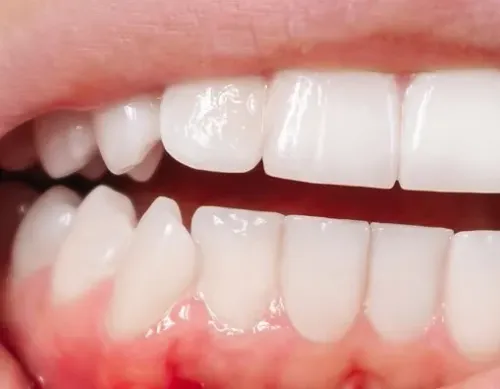
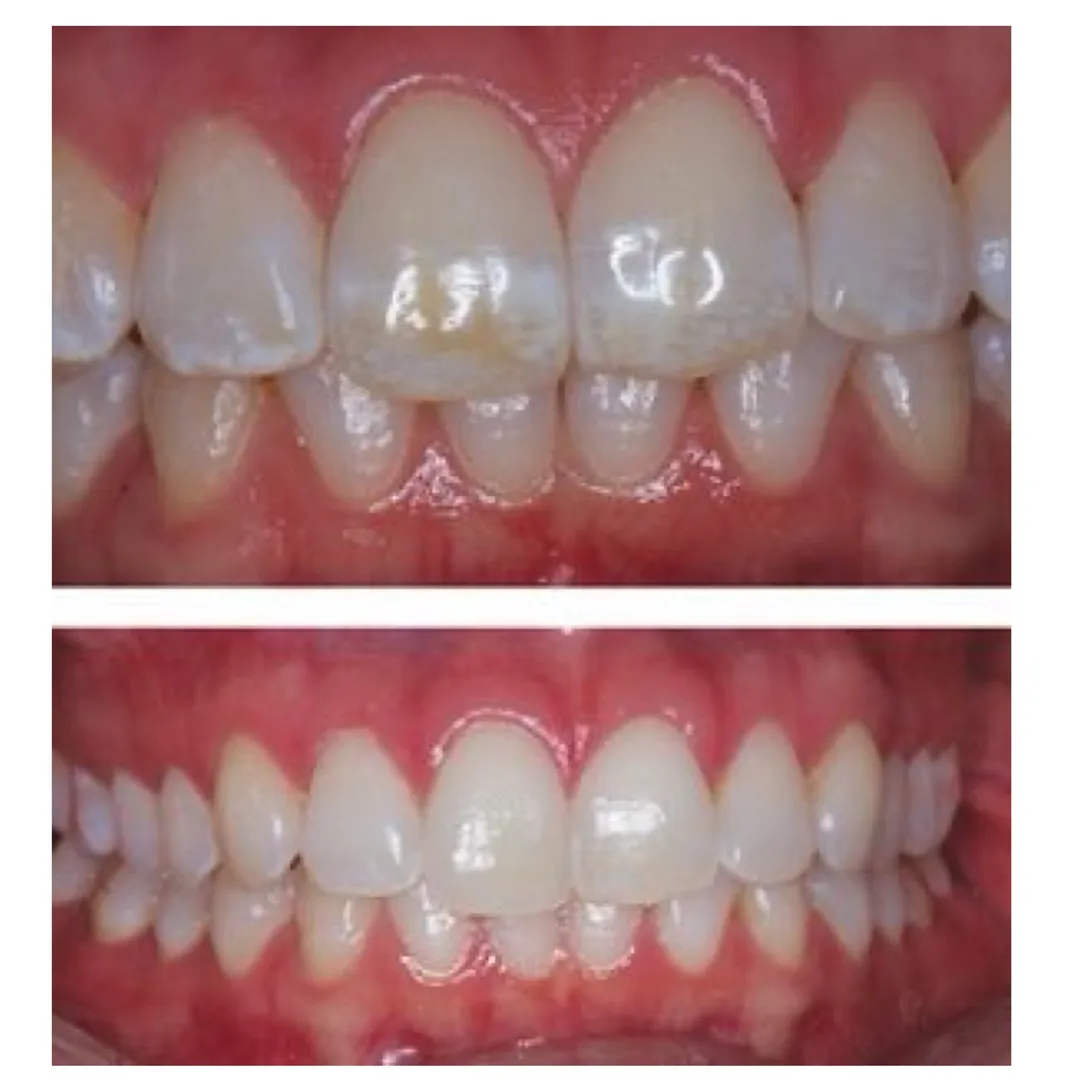
• Mild fluorosis: faint white streaks or specks on tooth surfaces that are usually a cosmetic concern.
• Moderate fluorosis: more widespread white patches, sometimes with yellowish or light brown stains.
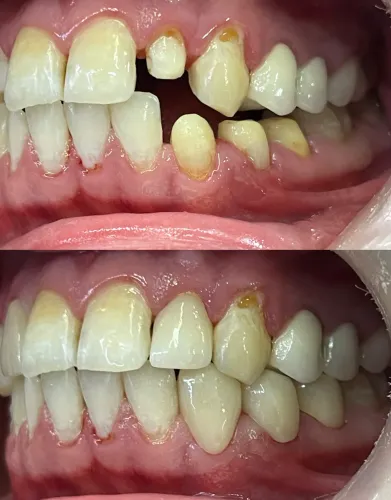
• Severe fluorosis: pronounced brown stains, surface pitting and increased roughness of enamel; teeth can look mottled or discolored and are harder to clean.
• Sensitivity and aesthetic self-consciousness: discoloration can cause patients to avoid smiling or feel embarrassed, and rough enamel can trap plaque, increasing sensitivity or caries risk.
- Why restorations and scaling alone are not enough
• Scaling (professional cleaning) removes plaque and tartar but does not change intrinsic enamel discoloration from fluorosis. Stains from fluorosis are within the enamel structure, not surface deposits.
• Simple restorations like small fillings address cavities but do not reliably fix widespread enamel discoloration or pitting caused by fluorosis.
• Some restorative approaches can help (veneers, composite bonding), but these treat the appearance rather than the underlying enamel condition. Treating fluorosis effectively often requires tailored cosmetic and preventive strategies rather than scaling or basic restorations alone.
Proven treatment options
• Microabrasion: removes a thin enamel layer to reduce superficial stains and smooth minor surface defects. Best for mild to moderate cases.
• Tooth whitening (bleaching): can improve color; often combined with microabrasion for better results.
Professional in‑office bleaching is recommended rather than over-the-counter products.
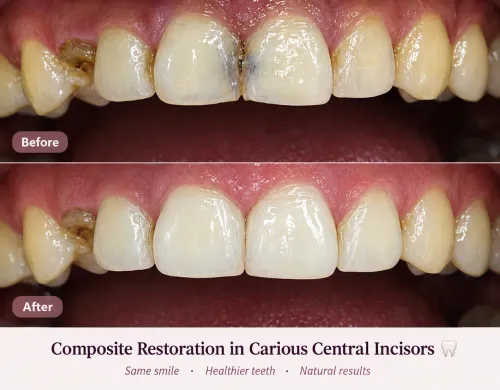
• Composite bonding: tooth-colored resin applied to mask discoloration and repair minor pitting. It conserves tooth structure and is a good option for localized defects.
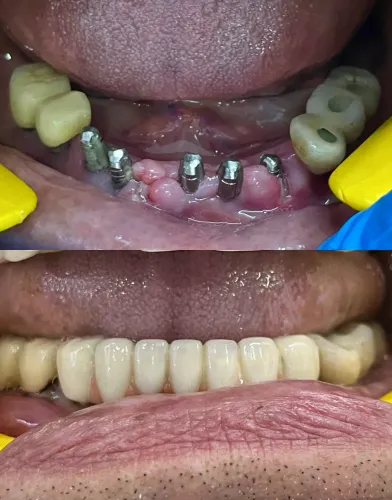
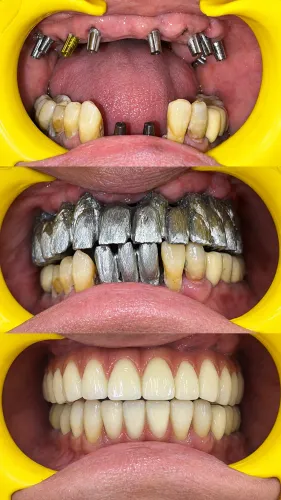
• Porcelain veneers or crowns: for moderate to severe fluorosis with significant staining or enamel loss, veneers or crowns provide a durable cosmetic solution.
• Preventive care: topical fluoride use should be reviewed with your dentist (to avoid excess in children), and good oral hygiene reduces secondary staining and decay.
- When to see a dentist in Lajpat Nagar
If discoloration affects your smile or causes sensitivity, book a consultation. A dentist will assess severity, take X-rays if needed, and recommend a combined plan , often microabrasion plus bleaching or cosmetic restorations, tailored to your goals and budget.
Dental fluorosis is primarily cosmetic but can affect confidence and oral health if enamel is pitted. Scaling and basic restorations help oral health but won’t reverse enamel changes caused by fluorosis.
At Madan’s Dental in Lajpat Nagar, we evaluate each case and offer modern, conservative treatments to restore function and appearance.
Madan’s Multispeciality Dental Care Centre, Lajpat Nagar
Visit our website or call 9818224469
Fluorosis is a change in tooth enamel caused by exposure to high levels of fluoride during tooth development.
It is common in areas with high natural fluoride in groundwater and shows up later in life as cosmetic concerns and, in severe cases, enamel damage.
What causes dental fluorosis?
• Excess fluoride while teeth are forming (usually in childhood). Sources include drinking water with high fluoride, fluoride supplements, swallowing fluoride toothpaste, and certain foods or beverages made with high‑fluoride water.
• Timing matters: adult teeth are affected when fluoride exposure occurs from infancy to around age 8, when permanent teeth develop.
• In Delhi and surrounding areas, groundwater fluoride levels can vary; long-term exposure is the main risk factor.
Common symptoms patients notice
• Mild fluorosis: faint white streaks or specks on tooth surfaces that are usually a cosmetic concern.
• Moderate fluorosis: more widespread white patches, sometimes with yellowish or light brown stains.
• Severe fluorosis: pronounced brown stains, surface pitting and increased roughness of enamel; teeth can look mottled or discolored and are harder to clean.
• Sensitivity and aesthetic self-consciousness: discoloration can cause patients to avoid smiling or feel embarrassed, and rough enamel can trap plaque, increasing sensitivity or caries risk.
- Why restorations and scaling alone are not enough
• Scaling (professional cleaning) removes plaque and tartar but does not change intrinsic enamel discoloration from fluorosis. Stains from fluorosis are within the enamel structure, not surface deposits.
• Simple restorations like small fillings address cavities but do not reliably fix widespread enamel discoloration or pitting caused by fluorosis.
• Some restorative approaches can help (veneers, composite bonding), but these treat the appearance rather than the underlying enamel condition. Treating fluorosis effectively often requires tailored cosmetic and preventive strategies rather than scaling or basic restorations alone.
Proven treatment options
• Microabrasion: removes a thin enamel layer to reduce superficial stains and smooth minor surface defects. Best for mild to moderate cases.
• Tooth whitening (bleaching): can improve color; often combined with microabrasion for better results.
Professional in‑office bleaching is recommended rather than over-the-counter products.
• Composite bonding: tooth-colored resin applied to mask discoloration and repair minor pitting. It conserves tooth structure and is a good option for localized defects.
• Porcelain veneers or crowns: for moderate to severe fluorosis with significant staining or enamel loss, veneers or crowns provide a durable cosmetic solution.
• Preventive care: topical fluoride use should be reviewed with your dentist (to avoid excess in children), and good oral hygiene reduces secondary staining and decay.
- When to see a dentist in Lajpat Nagar
If discoloration affects your smile or causes sensitivity, book a consultation. A dentist will assess severity, take X-rays if needed, and recommend a combined plan , often microabrasion plus bleaching or cosmetic restorations, tailored to your goals and budget.
Dental fluorosis is primarily cosmetic but can affect confidence and oral health if enamel is pitted. Scaling and basic restorations help oral health but won’t reverse enamel changes caused by fluorosis.
At Madan’s Dental in Lajpat Nagar, we evaluate each case and offer modern, conservative treatments to restore function and appearance.
Madan’s Multispeciality Dental Care Centre, Lajpat Nagar
Visit our website or call 9818224469
Keywords