Do you feel a sharp sting when you sip hot tea, bite into ice cream, or brush your teeth? Tooth sensitivity is a common problem for adults and can interfere with eating, speaking and everyday comfort. If you live near Lajpat Nagar, Saket, South Ex, Malviya Nagar or Greater Kailash, this short guide explains why sensitivity happens, common symptoms, and simple ways to manage it — including when to see a dentist.
What is tooth sensitivity?
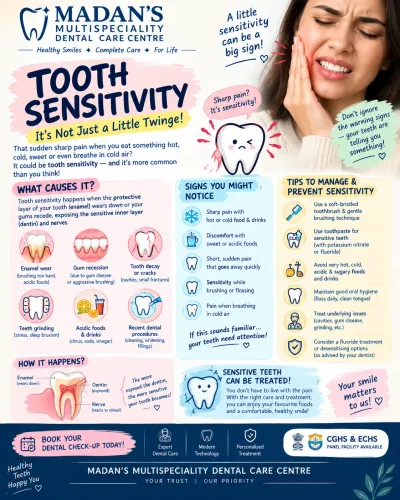
Tooth sensitivity (dentin hypersensitivity) occurs when the protective enamel or gum covering that shields the inner layers of your teeth wears away, exposing the dentin and nerve endings. This exposure causes brief, sharp pain in response to hot, cold, sweet, acidic foods, or even cold air.
Common symptoms patients notice
Sudden, sharp pain when consuming hot, cold, sweet, or acidic foods and drinks.
Discomfort while brushing or flossing.
Pain when biting or chewing hard foods.
Sensitivity that comes and goes, often worse in the morning or after acidic meals.
Top causes of tooth sensitivity
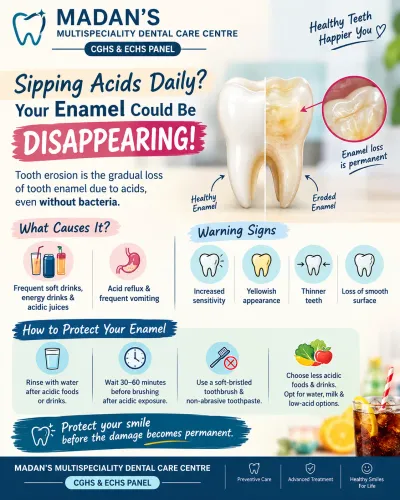
Enamel erosion: Acidic foods, frequent soft drinks, fruit juices, and excessive teeth whitening can wear enamel away.
Gum recession: Aging, aggressive brushing, or gum disease can pull gums away from teeth and expose root surfaces.
Toothbrush abrasion: Hard-bristled brushes or vigorous brushing damage enamel and gums.
Cracked or fractured teeth: Micro-cracks let stimuli reach the tooth nerve.
Worn fillings or crowns: Old dental work can expose dentin or create gaps where sensitivity develops.
Recent dental treatments: Procedures like bleaching or restorations sometimes cause temporary sensitivity.
How to manage and reduce sensitivity
Use a desensitizing toothpaste: Choose products that contain potassium nitrate or stannous fluoride and brush twice daily. Patients often see improvement within 2–4 weeks.
Switch to a soft-bristled toothbrush: Use gentle strokes and avoid heavy scrubbing. Consider an electric brush with pressure control.
Avoid acidic foods and drinks: Reduce soda, fruit juices, pickles, and citrus; rinse with water after consuming acidic items.
Limit abrasive toothpastes: Whitening or highly abrasive pastes can worsen enamel loss.
Apply fluoride treatments: At-home fluoride rinses or in-office fluoride varnish strengthen enamel and reduce sensitivity.
Treat gum disease and receding gums: Professional cleaning and periodontal care can stop further recession and sensitivity.
Repair damaged teeth or restorations: Crowns, bonding, or replacing worn fillings can seal exposed dentin.
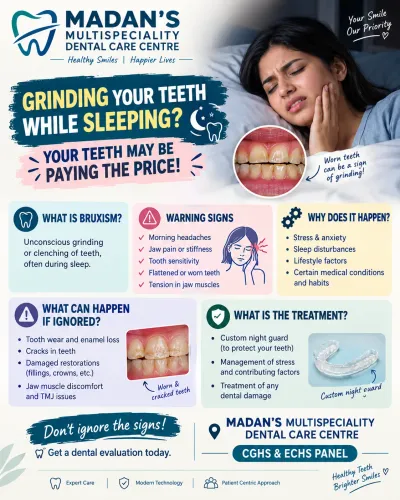
Night guards for teeth grinding: If you grind (bruxism), a custom night guard protects enamel from wear.
Professional advice for whitening: If you want whiter teeth, ask your dentist for low-sensitivity options or in-office protection.
When to see a dentist in Delhi
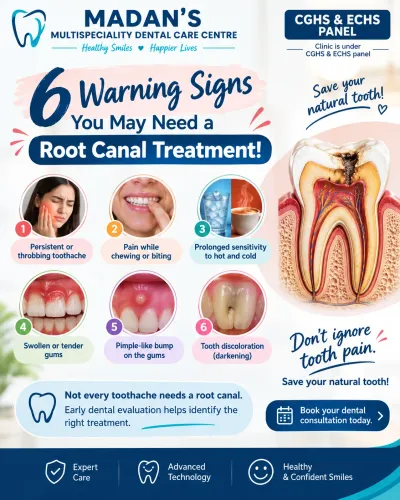
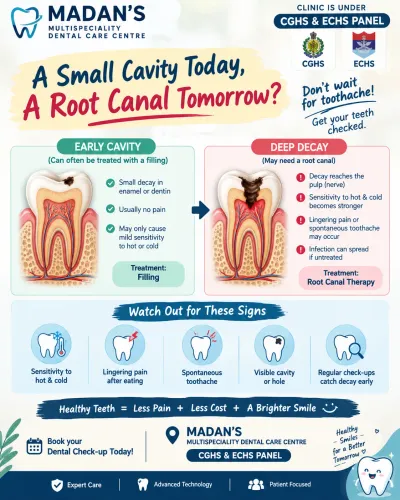
If sensitivity lasts longer than two weeks, becomes severe, or is accompanied by swelling, fever, persistent pain, or visible cracks, book an appointment. Persistent sensitivity might indicate cavities, a cracked tooth, or an infection that needs treatment.
Local care near you
If you’re in Lajpat Nagar, Saket, South Ex, Malviya Nagar or Greater Kailash and experiencing tooth sensitivity, our clinic offers a full assessment: diagnosis, minimally invasive treatments (fluoride varnish, bonding), and personalized prevention plans. Early evaluation prevents small problems becoming bigger.
Want help now?
Call or book an appointment at Madan Multi-speciality clinic for a sensitivity check and tailored treatment plan. Quick, simple steps can restore comfort and protect your teeth for years.
Visit us at Madan Multi-speciality Dental Care
Call us : 98183 31692
What is tooth sensitivity?
Tooth sensitivity (dentin hypersensitivity) occurs when the protective enamel or gum covering that shields the inner layers of your teeth wears away, exposing the dentin and nerve endings. This exposure causes brief, sharp pain in response to hot, cold, sweet, acidic foods, or even cold air.
Common symptoms patients notice
Sudden, sharp pain when consuming hot, cold, sweet, or acidic foods and drinks.
Discomfort while brushing or flossing.
Pain when biting or chewing hard foods.
Sensitivity that comes and goes, often worse in the morning or after acidic meals.
Top causes of tooth sensitivity
Enamel erosion: Acidic foods, frequent soft drinks, fruit juices, and excessive teeth whitening can wear enamel away.
Gum recession: Aging, aggressive brushing, or gum disease can pull gums away from teeth and expose root surfaces.
Toothbrush abrasion: Hard-bristled brushes or vigorous brushing damage enamel and gums.
Cracked or fractured teeth: Micro-cracks let stimuli reach the tooth nerve.
Worn fillings or crowns: Old dental work can expose dentin or create gaps where sensitivity develops.
Recent dental treatments: Procedures like bleaching or restorations sometimes cause temporary sensitivity.
How to manage and reduce sensitivity
Use a desensitizing toothpaste: Choose products that contain potassium nitrate or stannous fluoride and brush twice daily. Patients often see improvement within 2–4 weeks.
Switch to a soft-bristled toothbrush: Use gentle strokes and avoid heavy scrubbing. Consider an electric brush with pressure control.
Avoid acidic foods and drinks: Reduce soda, fruit juices, pickles, and citrus; rinse with water after consuming acidic items.
Limit abrasive toothpastes: Whitening or highly abrasive pastes can worsen enamel loss.
Apply fluoride treatments: At-home fluoride rinses or in-office fluoride varnish strengthen enamel and reduce sensitivity.
Treat gum disease and receding gums: Professional cleaning and periodontal care can stop further recession and sensitivity.
Repair damaged teeth or restorations: Crowns, bonding, or replacing worn fillings can seal exposed dentin.
Night guards for teeth grinding: If you grind (bruxism), a custom night guard protects enamel from wear.
Professional advice for whitening: If you want whiter teeth, ask your dentist for low-sensitivity options or in-office protection.
When to see a dentist in Delhi
If sensitivity lasts longer than two weeks, becomes severe, or is accompanied by swelling, fever, persistent pain, or visible cracks, book an appointment. Persistent sensitivity might indicate cavities, a cracked tooth, or an infection that needs treatment.
Local care near you
If you’re in Lajpat Nagar, Saket, South Ex, Malviya Nagar or Greater Kailash and experiencing tooth sensitivity, our clinic offers a full assessment: diagnosis, minimally invasive treatments (fluoride varnish, bonding), and personalized prevention plans. Early evaluation prevents small problems becoming bigger.
Want help now?
Call or book an appointment at Madan Multi-speciality clinic for a sensitivity check and tailored treatment plan. Quick, simple steps can restore comfort and protect your teeth for years.
Visit us at Madan Multi-speciality Dental Care
Call us : 98183 31692
Keywords