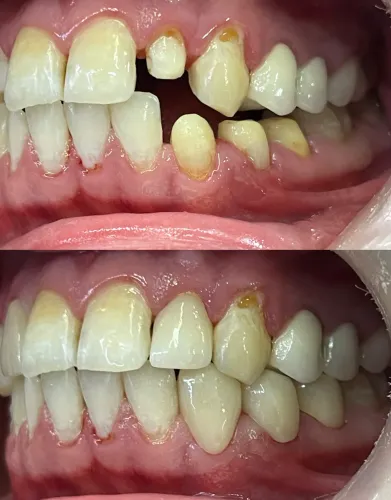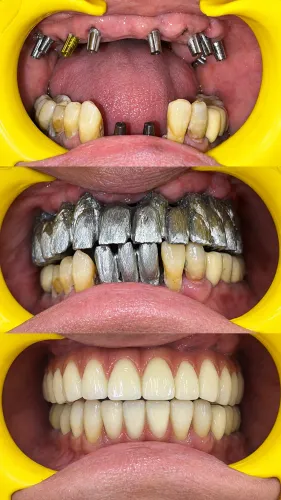
A straight smile is about more than appearance braces or clear aligners can help correct crowding, gaps, crooked teeth, bite problems, and difficulty cleaning between teeth, which may reduce plaque buildup and gum issues over time.
Why alignment matters
If teeth are crowded or uneven, patients often notice food getting stuck, frequent biting of the cheeks, jaw discomfort, uneven wear, or sensitivity while chewing. These problems can affect oral hygiene and confidence, especially for adults who want a treatment that fits into work, family, and social life.
Braces: reliable for complex cases
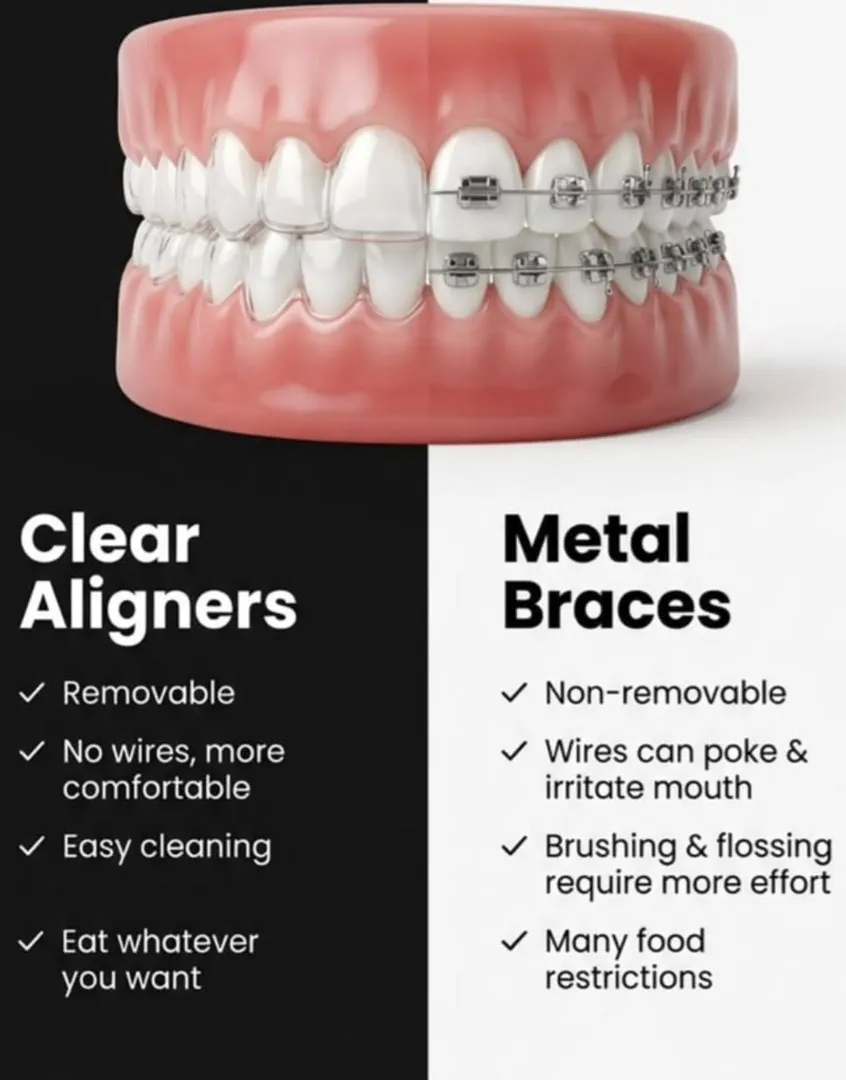
Traditional braces use brackets and wires to gradually move teeth into place. They are often recommended when the alignment issue is more complex, such as severe crowding, larger gaps, rotated teeth, or bite correction that needs more controlled movement.
Braces stay on the teeth, so they work continuously without depending on patient discipline. They can be more visible than aligners, but they remain a dependable option for many patients who want predictable results.
Clear aligners: discreet and flexible
Clear aligners are removable transparent trays made to fit your teeth. They are popular with adults who want a less noticeable treatment and the convenience of removing trays for meals and brushing.
They may be a good option for mild to moderate crowding, small gaps, or patients who prefer a more discreet orthodontic solution. However, aligners need consistent wear, usually most of the day, or treatment may take longer than expected.
Why alignment matters
If teeth are crowded or uneven, patients often notice food getting stuck, frequent biting of the cheeks, jaw discomfort, uneven wear, or sensitivity while chewing. These problems can affect oral hygiene and confidence, especially for adults who want a treatment that fits into work, family, and social life.
Braces: reliable for complex cases
Traditional braces use brackets and wires to gradually move teeth into place. They are often recommended when the alignment issue is more complex, such as severe crowding, larger gaps, rotated teeth, or bite correction that needs more controlled movement.
Braces stay on the teeth, so they work continuously without depending on patient discipline. They can be more visible than aligners, but they remain a dependable option for many patients who want predictable results.
Clear aligners: discreet and flexible
Clear aligners are removable transparent trays made to fit your teeth. They are popular with adults who want a less noticeable treatment and the convenience of removing trays for meals and brushing.
They may be a good option for mild to moderate crowding, small gaps, or patients who prefer a more discreet orthodontic solution. However, aligners need consistent wear, usually most of the day, or treatment may take longer than expected.
Keywords