Fixed Orthodontic Braces
Description
Definition:
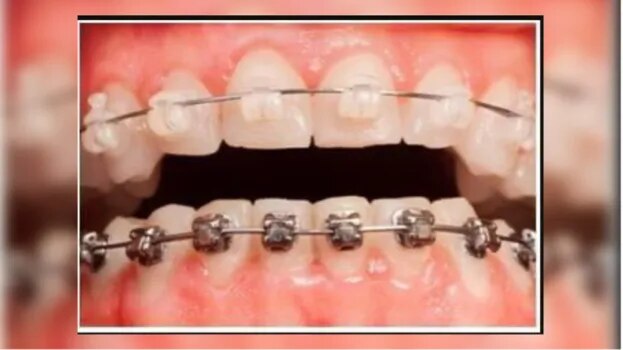
Fixed orthodontic braces are dental appliances that are bonded to the teeth to correct misalignment, crowding, spacing, and bite issues. Unlike removable appliances, they remain attached throughout the treatment period and are adjusted periodically by an orthodontist.
Components of Fixed Braces
Brackets:
Small metal, ceramic, or composite attachments bonded to each tooth.
Archwire:
A thin metal wire that runs through the brackets and applies continuous gentle pressure to move teeth.
Bands:
Metal rings placed around molars to anchor the appliance.
Ligatures (O-rings):
Tiny elastic or metal ties that hold the archwire in place on the brackets.
Buccal Tubes:
Small attachments on molars that help hold the ends of the archwire.
Elastics (Rubber Bands):
Used to apply additional force to correct bite relationships.
Types of Fixed Braces
Metal Braces
Made of stainless steel; traditional type
Strong, cost-effective
Ceramic Braces
Tooth-colored brackets
Aesthetic, less noticeable
Self-ligating Braces
Use clips instead of elastic ties
Easier to clean, less friction
Lingual Braces
Attached to the back (tongue side) of teeth
Invisible from the front
Procedure
Initial Consultation & Records: X-rays, photos, and impressions/scans.
Bonding: Brackets are glued onto teeth, and the archwire is placed.
Regular Adjustments: Every 4–6 weeks to tighten or replace wires and elastics.
Debonding: Removal of braces after achieving desired alignment.
Retention Phase: Retainers are given to maintain the new tooth position.
Advantages
Precise and controlled tooth movement
Suitable for complex orthodontic cases
Continuous treatment (cannot be removed by patient)
Oral Care Tips
Brush after every meal using a soft toothbrush and interdental brush
Floss daily with orthodontic floss threaders or water flossers
Use fluoride mouthwash to prevent decalcification
Regular dental check-ups and professional cleaning